

Federal Revenue Composition: Understanding Malaysia’s Income Sources
Breakdown of how Malaysia generates federal revenue through taxation, petroleum exports, and other sources — and how these streams have shifted over time.
Read ArticleMalaysia’s reliance on oil and gas exports creates both opportunity and vulnerability. We’re exploring how diversification strategies can strengthen the economy and reduce fiscal exposure to commodity price swings.
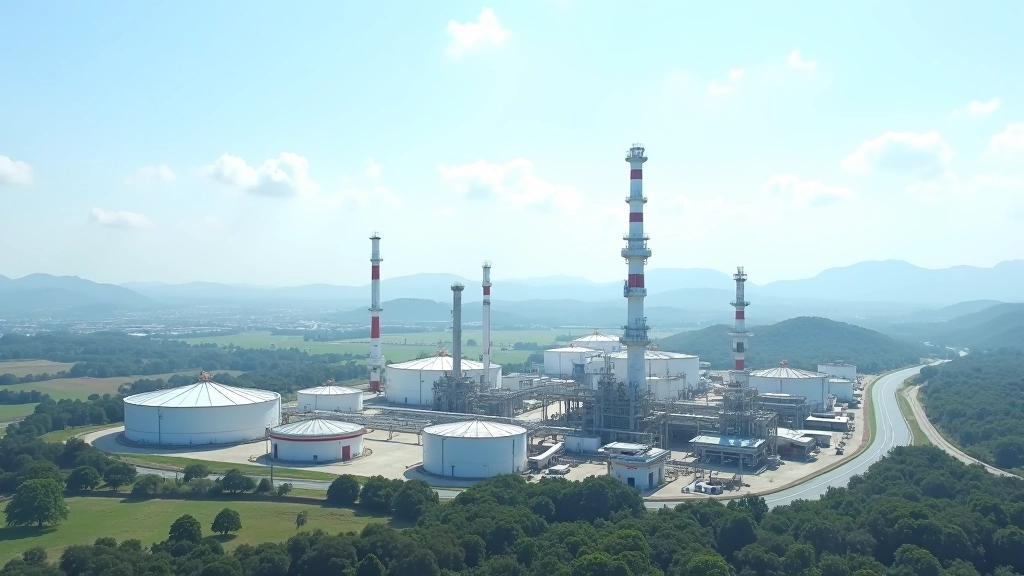
Petroleum exports account for roughly 30% of federal government revenue in Malaysia. That’s a substantial chunk. When oil prices drop, government budgets feel the impact immediately — less money for schools, infrastructure, healthcare. When prices spike, there’s temporary relief but also the temptation to spend rather than save.
The real issue isn’t petroleum itself. It’s the concentration risk. You’re betting your budget on one commodity, one global market, and forces completely outside your control. But here’s the thing: Malaysia has advantages other resource-dependent nations don’t. The challenge is using them effectively.

Oil price swings create unpredictable budget cycles that make long-term planning difficult.
When crude prices drop 30-40% in months, government revenue falls hard. Development projects get delayed. Public sector wages stall. Budget deficits widen.
Departments can’t commit to multi-year programs when revenue estimates swing 15% annually. Budget cycles become reactive rather than strategic.
Essential spending (salaries, pensions, subsidies) doesn’t adjust with revenue. During downturns, deficits balloon because you can’t instantly cut commitments.
Oil reserves aren’t infinite. Production naturally declines. By 2035-2040, petroleum won’t be the cash cow it’s been. The transition needs to start now.
Reducing petroleum dependency doesn’t mean abandoning oil — it means building multiple revenue legs so no single commodity controls your budget. Malaysia’s actually well-positioned here.
Tax revenue from manufacturing, services, and tourism can be expanded. Corporate income tax, personal income tax, and consumption taxes all respond to economic growth rather than commodity prices. The key is growing these faster than petroleum shrinks.
A 2-3% annual increase in non-oil tax revenue, combined with modest petroleum decline, keeps total revenue stable. Over 10 years, you’ve fundamentally rebalanced your budget. It’s not quick, but it’s doable.

Better collection of existing taxes yields 1-2% additional revenue without raising rates. Digital systems, compliance monitoring, and closing loopholes work. Malaysia’s already invested here — continuing momentum matters.
Technology, finance, creative industries, and professional services generate tax revenue tied to productivity growth, not commodity cycles. Incentives for semiconductor manufacturing, software development, and digital finance make sense.
Tourism taxes, accommodation levies, and entertainment taxes scale with visitor numbers. Regional tourism hubs — cultural sites, nature reserves, business conferences — generate steady income streams independent of oil prices.
Save petroleum revenue during high-price years. This smooths budget cycles and funds non-petroleum development during downturns. It’s countercyclical spending — exactly what stabilizes economies.

Theory is one thing. Implementation’s different. You’re not starting from scratch. Malaysia already collects RM150+ billion annually in non-oil tax revenue. The question is: How do you grow that base?
It requires political will. Sometimes it means unpopular moves — closing tax loopholes, raising rates on specific sectors, reducing subsidies. But it’s less painful than sudden budget cuts when petroleum revenues collapse.
The timeline matters too. You can’t diversify overnight. But a 15-year plan to shift from 30% petroleum-dependent to 15-20% petroleum-dependent? That’s realistic. It’s gradual enough that economic disruption is minimal.
“The best time to diversify your revenue was 10 years ago. The second best time is now. Every year you delay makes the transition sharper and more disruptive.”
— Fiscal Policy Analysis
At 30% of federal revenue, oil price swings directly impact budgets. Commodity volatility creates planning uncertainty and fiscal stress.
Growing non-oil tax revenue by 2-3% annually, while petroleum declines naturally, gradually rebalances the budget without shock.
Tax administration, sector growth, tourism expansion, and sovereign wealth funds aren’t either/or — they’re complementary strategies that compound.
You won’t eliminate petroleum dependency in 5 years. But a deliberate 15-year transition to 15-20% petroleum dependency is manageable and gives time for structural changes.
This article provides educational information about Malaysia’s fiscal policy, petroleum revenue composition, and diversification strategies. It’s not financial advice, policy recommendation, or investment guidance. Fiscal policy involves complex trade-offs, political considerations, and economic variables that change constantly. Revenue projections, growth estimates, and policy outcomes described here are illustrative — actual results depend on global commodity markets, economic conditions, and government implementation. For specific financial or policy decisions, consult government economic reports, professional economists, or policy analysts who specialize in Malaysian fiscal matters.